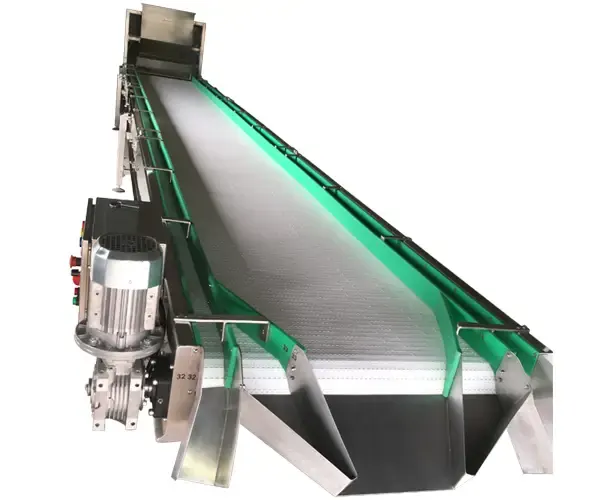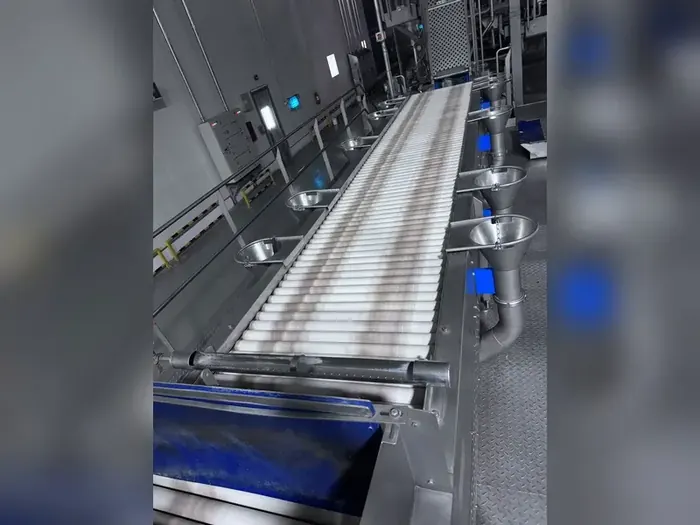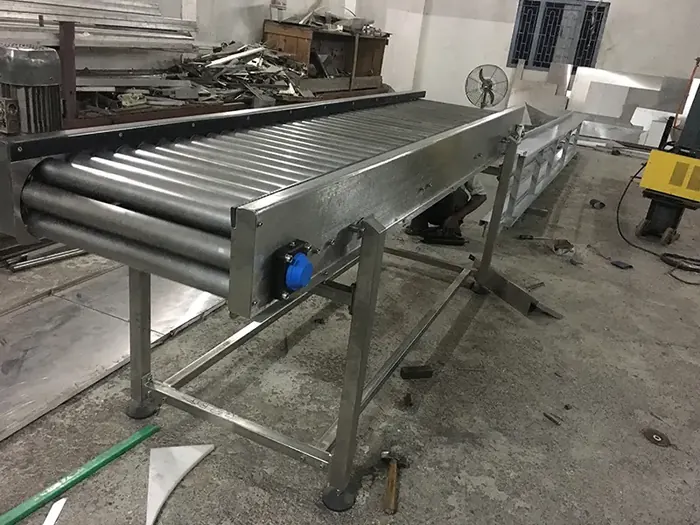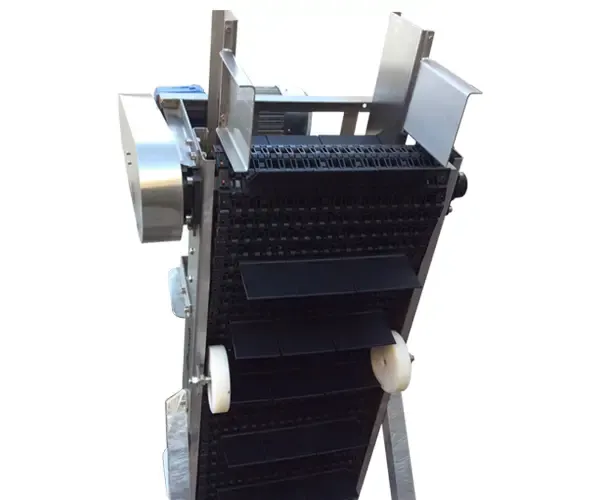
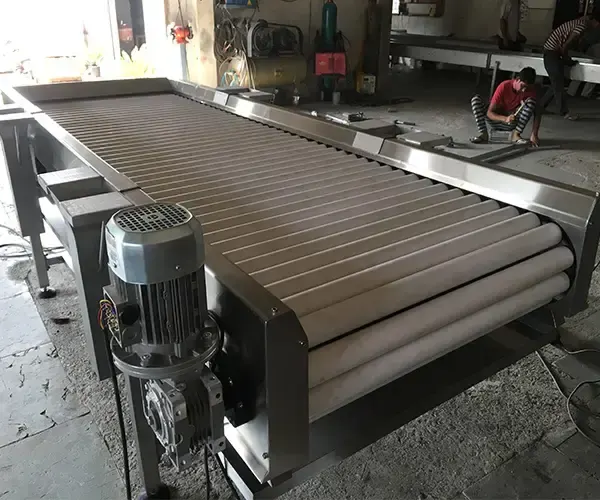
What makes a good inspection conveyor?
- Steady, adjustable speed: so operators have time to see each piece.
- Product spread in a single layer: a spreader or vibrator at the infeed spreads product across the belt.
- Good visibility: belt colour contrasting with the product and lighting above the belt.
- Ergonomics: correct working height, operator stands and reject chutes within easy reach.
Inspection Conveyor Belt – technical details
| Application | Inspection conveyor |
|---|---|
| Usage | Peanuts, vegetables, potato, etc. |
| Belt material | PP, POM, PVC, PU |
| Colour | Blue, green, grey, white |
| Frame | SS 304 or MS powder coated |
| Speed | As per requirement (adjustable) |
| Inclination | 0 to 90° |
| Drive | Sprocket or roller |
| Options | Spreader, lighting, operator platforms, reject chutes |
Values are typical; final sizes, speeds and materials are confirmed in the quotation for your application.
Peanuts and groundnut inspection conveyor
For peanuts and groundnuts, Omtech builds peanut inspection conveyors with spreader systems so kernels are spread evenly before reaching the inspection zone. Rejects are dropped into side chutes and good product continues to roasting, blanching or packing.
Potato and vegetable inspection
Roller inspection conveyors turn potatoes as they travel so all sides can be seen. Belt inspection conveyors are used for leafy and cut vegetables. These conveyors often follow a washing conveyor and feed a steep incline conveyor.
Construction
PP, POM, PVC or PU belts in blue, green, grey or white; SS 304 or MS powder-coated frames; sprocket or roller drive; incline from 0 to 90° where needed; side guards as per product.
Applications